Teaching Communities Safe Water Practices: Protecting Families from Waterborne Disease
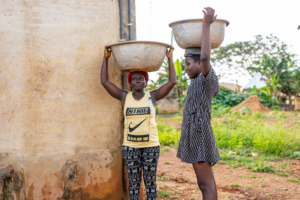
Access to safe water is something many people take for granted, yet in countless communities around the world, unsafe water is still a daily reality. Contaminated water leads to devastating health consequences, from diarrhea to life-threatening infections. That’s why organizations like the Bright Water Foundation emphasize teaching—educating local families, schools, and health workers about safe water practices, hygiene, and the hidden dangers of waterborne disease.
This educational effort is the first pillar of their proven “Teach–Test–Treat” model, and it underpins every other intervention. Here’s how it works and why it’s changing lives.
Why Education Comes First
Waterborne diseases often thrive because people simply do not know the risks hidden in seemingly clear water. In many rural communities, families rely on rivers, open wells, or boreholes, believing the water looks safe enough to drink. Yet invisible pathogens—bacteria, viruses, and parasites—can turn a sip of water into a serious health threat.
Educating communities changes that. When families understand how diseases like cholera, typhoid, and dysentery spread through contaminated water, they become empowered to adopt life-saving habits. Knowledge transforms attitudes and fuels the demand for safer water solutions.
Making Learning Practical and Relevant
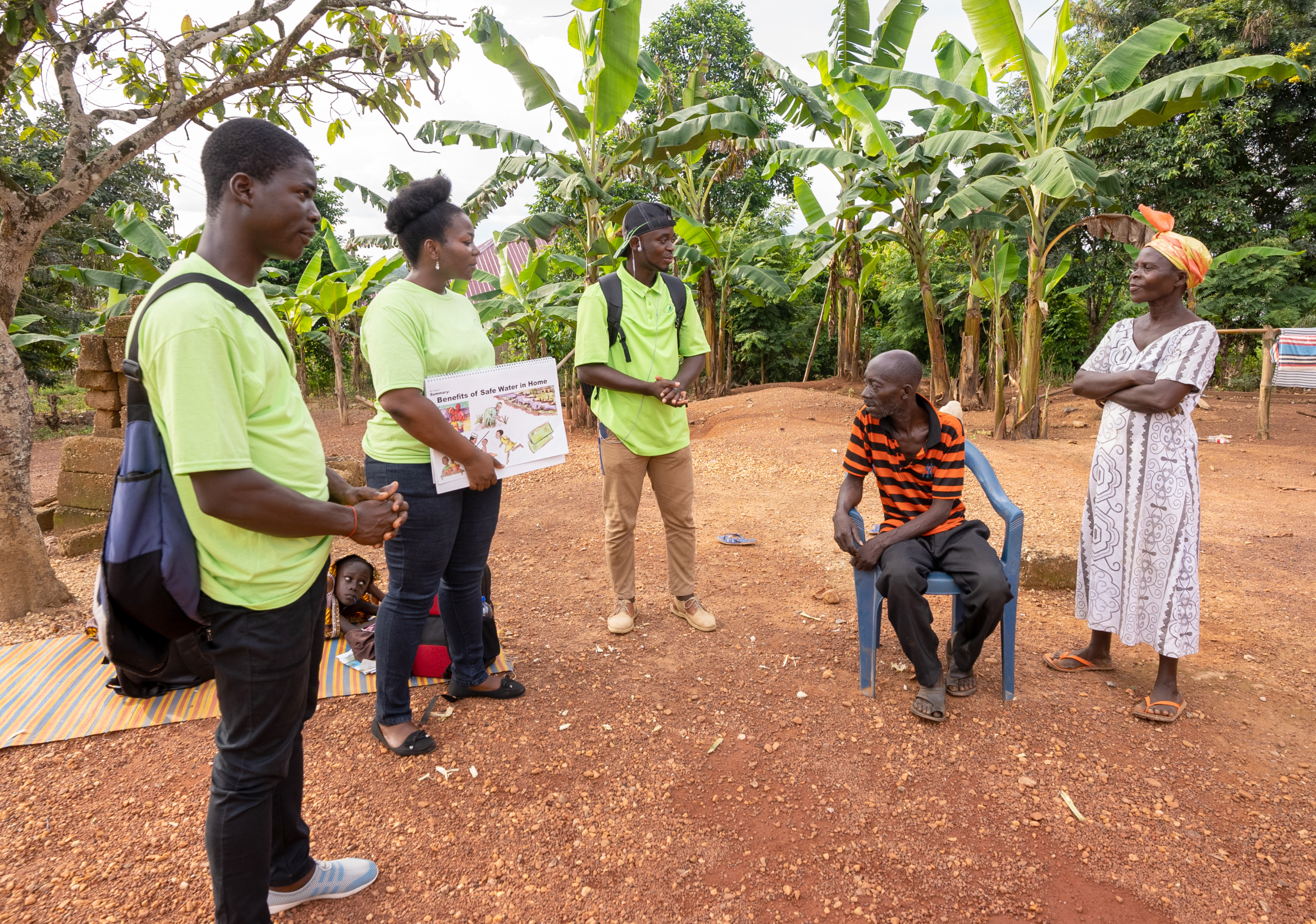
Bright Water’s educators use hands-on teaching methods:
Visual aids and simple posters that illustrate the disease cycle.
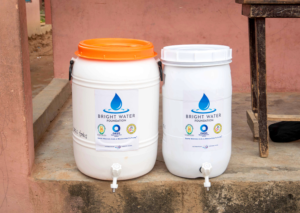
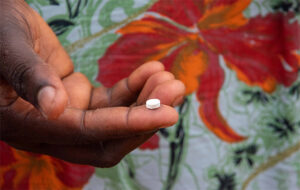
Live demonstrations of cleaning containers or adding chlorine drops.
Role-playing scenarios so families can practice what to do.
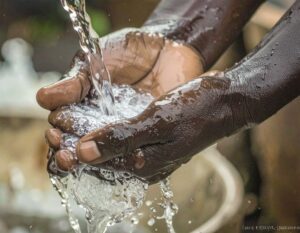
The goal is to build confidence and skills, not just repeat instructions. When people see the practical steps they can take—washing hands before eating, using ladles instead of dipping cups, or cleaning storage pots—they are more likely to adopt and stick with these habits.
Changing Behavior, Saving Lives
This emphasis on teaching is far more than an awareness campaign. It has measurable impacts:
✅ Families start treating water consistently.
✅ Fewer children suffer repeated bouts of diarrhea, meaning they miss less school and stay healthier.
✅ Community outbreaks become less frequent, protecting even the most vulnerable.
Over time, these educational efforts foster a culture of health. Instead of only responding to sickness, communities prevent it—breaking the costly cycle of disease and medical treatment.